
Shop Bridal Gharara Designs Where the Flare Starts at Your Knee
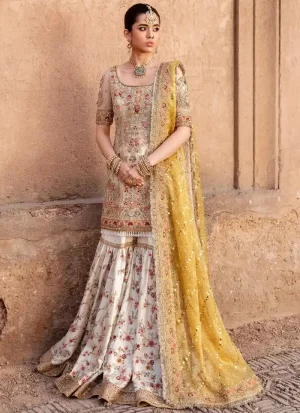
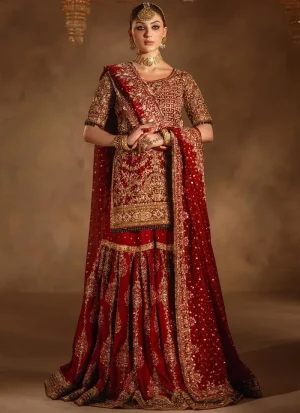
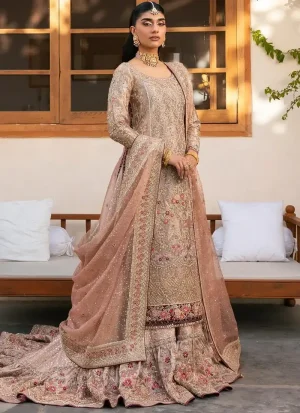
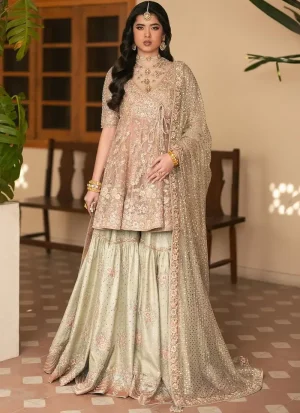
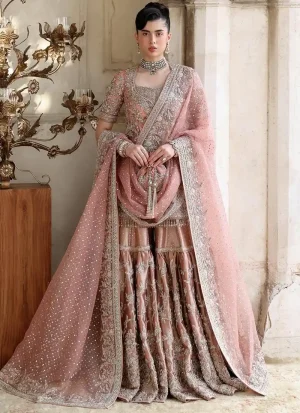
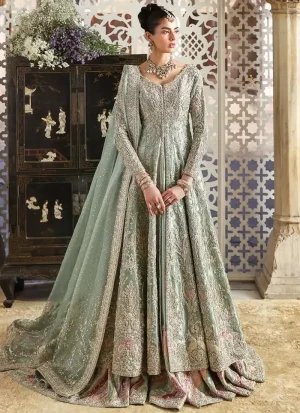
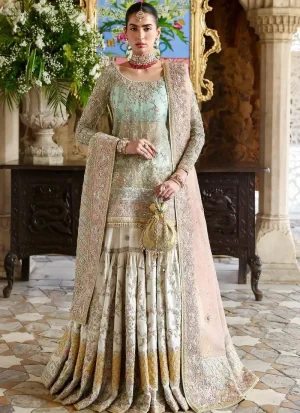
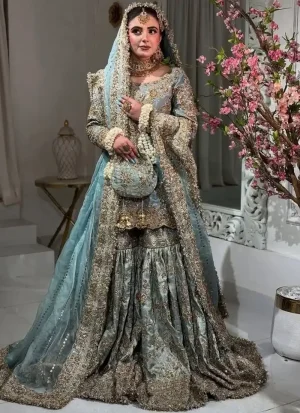
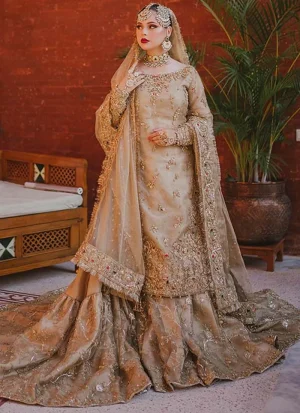
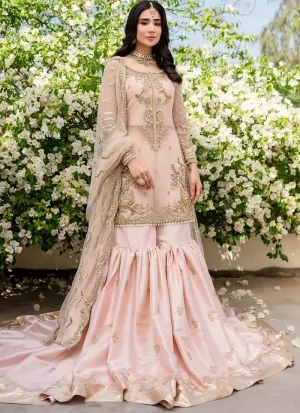
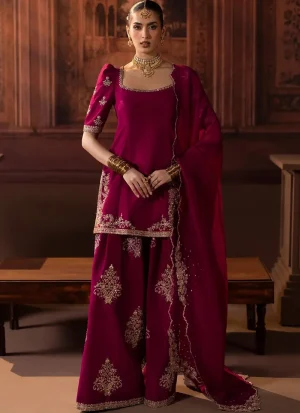
A bridal gharara only falls the way it should when its knee joint, the gathered seam where the fitted leg breaks into the flare, sits at your own knee. We stitch each one after you order: choose Custom Size and it is cut to the measurements you send, or a standard size from our chart. The range runs from white, ivory and gold through powder blue, lilac and peach to pistachio, maroon and deep red, in organza, tissue silk or jamawar. For a flare that pools on the floor, see our floor-length farshi ghararas.

Showing 1–20 of 40 resultsSorted by latest
-
£849.00
-

-
-
-
-
-
-
-
-
-
-
-
-
-
-
-
£899.00
-
-


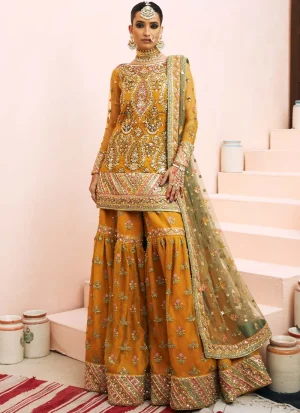


Showing 1–20 of 40 resultsSorted by latest
Gharara or sharara: how to tell them apart
Look at the knee. A gharara has two legs that sit close from waist to knee; there, a gathered joint, usually hidden under a band of lace, gota or embroidery, releases deep pleats that fall to the floor. A sharara also has two legs, but it widens from the hip with no joint, so it looks looser from the top. Families and designers do not always use the two names the same way, so one shop’s bridal sharara can be the next shop’s gharara. A lehenga has no legs at all: it is one full skirt. If you are weighing that shape, compare our full-skirted bridal lehengas, or see every other silhouette in our Pakistani bridal dress range.
Why the knee joint decides the fit
On a lehenga, a little extra ease at the waist hardly shows. On a gharara, the height of the joint is visible from across the room: placed too high, the fitted part looks short and the flare begins at the thigh; placed too low, it shortens your stride. With Custom Size we stitch your gharara exactly to the measurements you send. After you order, our team contacts you for the full set; mention your height and the heel you plan to wear, because both change where the hem lands. Our workshop works in inches. For a standard size, check the UK size guide and take the larger size if you fall between two.
Choosing the kameez length
The kameez sets the proportion of the whole outfit. A mid-length kameez of 30 to 36 inches ends around or just above the knee, depending on your height, and leaves the band and the flare on show; check it against your shoulder-to-knee measurement. A longer kameez falls past the knee, hides the joint and gives more coverage. You will find full sleeves with boat, round, V or square necklines, and off-shoulder cuts too. If a design is right except for its length or neckline, ask before you order: changes that add fabric, embroidery or labour are priced and agreed with you before work starts.
Colour for each wedding function
White, off-white, ivory and gold, worked in gold, rose gold or silver, are the classic Nikkah palette; see our ghararas made for the Nikkah. Deep red and maroon with antique gold keep the Baraat traditional. Powder blue, ice blue, lilac, peach, nude pink and soft grey keep a Walima or reception soft after a red Baraat. Pistachio, sage and bottle green, orange and yellow belong to the Mehndi; see our ghararas for the Mehndi. If one gharara has to serve two days, ivory or gold with mixed metal work moves between a daytime and an evening event more easily than a bright shade.
Fabric, handwork and weight
What sits below the knee shapes the flare. Tissue silk and organza are crisp but light, so the pleats swing with each step; jamawar and brocade are heavier, patterned weaves and katan silk is denser too, so they hold deeper, steadier folds. A cancan layer can be added under the flare to keep it full. The handwork builds on dabka, zari, nakshi, kora and salma sitara with sequins and pearls, some designs add zardozi or cutdana, and lace trims such as gota, kiran or sequin lace finish the edges. For a long day on your feet, choose a lighter base and ask us to reduce the work before we start; every bridal design can be ordered as Full Custom Design.
Delivery to the UK and Europe
Count back from your wedding date with these times. Each starts the day after you order, runs in calendar days and covers stitching and courier together:
- Normal Delivery: up to 3 months, free
- Rush Delivery: up to 30 calendar days, £59
- Super Rush Delivery: up to 14 calendar days, £199
We also deliver to the rest of Europe in pounds sterling, with the same times and the European delivery charge shown at checkout. Import charges are normally prepaid by us; if a courier ever asks you for customs, duty or tax, send us the receipt and we refund the verified amount. Cancel a bridal order within 24 hours for a full refund; cancel later, before dispatch, and 35% of the amount paid is deducted. The full terms are on our delivery information page.
Bridal gharara questions
How much does a bridal gharara cost?
You will see the price in pounds on each design, and the grid can be sorted from low to high. Three things move it: the extra fabric in a farshi length, the base cloth, and how much zardozi or dabka covers the kameez, band and hem. We price any change you ask for that needs more fabric, embroidery or labour before we begin, and Rush Delivery (£59) or Super Rush Delivery (£199) is only added if you choose it.
Can my sisters wear matching ghararas?
Yes. Our bridal gharara designs suit bridesmaids too, so each sister can have hers stitched to her own size, in your colour or a softer one, with lighter work if she prefers. Cousins and friends after something simpler will find our sharara suits for guests; guest wear arrives at UK addresses within up to 18 calendar days.
Can I see my gharara before it is sent?
Yes. While it is being made, ask us on WhatsApp for progress photos and close-up videos of the work. Ivory and powder blue can shift on a phone screen and gold thread photographs warmer than it is, so judge the colour and the embroidery from the video rather than from product photos alone.
Is a gharara easy to walk and sit in?
Easier than its volume suggests, because each leg moves on its own. On stairs, lift the flare a little at both knees; when you sit, let it fan out at your feet so the band and the hem show in photos. If you plan to dance at the Mehndi or walk across grass, a standard length is more practical than a farshi, whose hem rests on the floor.